
Lua had always loved big cities. She grew up in one and was excited to be moving into a big city again. She was scared, though, because for the past couple of years, she hadn’t even seen a building taller than 12 floors. She had often visited New York City and knew where to find really cheap coffee and places in Midtown. The subway system scared her, though. Even if the uptown and downtown signs were clear, her navigation skills were poor. She knew she would get lost, and getting lost in New York City seemed overwhelming. So after she landed, she took an Uber to her house. She hadn’t seen her place before. All she knew was that the G train was a 5-minute walk and that her roommates seemed nice. At 10 pm, when she arrived, she stood outside. It was a hot summer night. The kind that marked the end of the season, after which fall would begin. She called one of her roommates to help her with the keys and her giant suitcase. And as she arrived, she finally realised that she had moved to a new place.
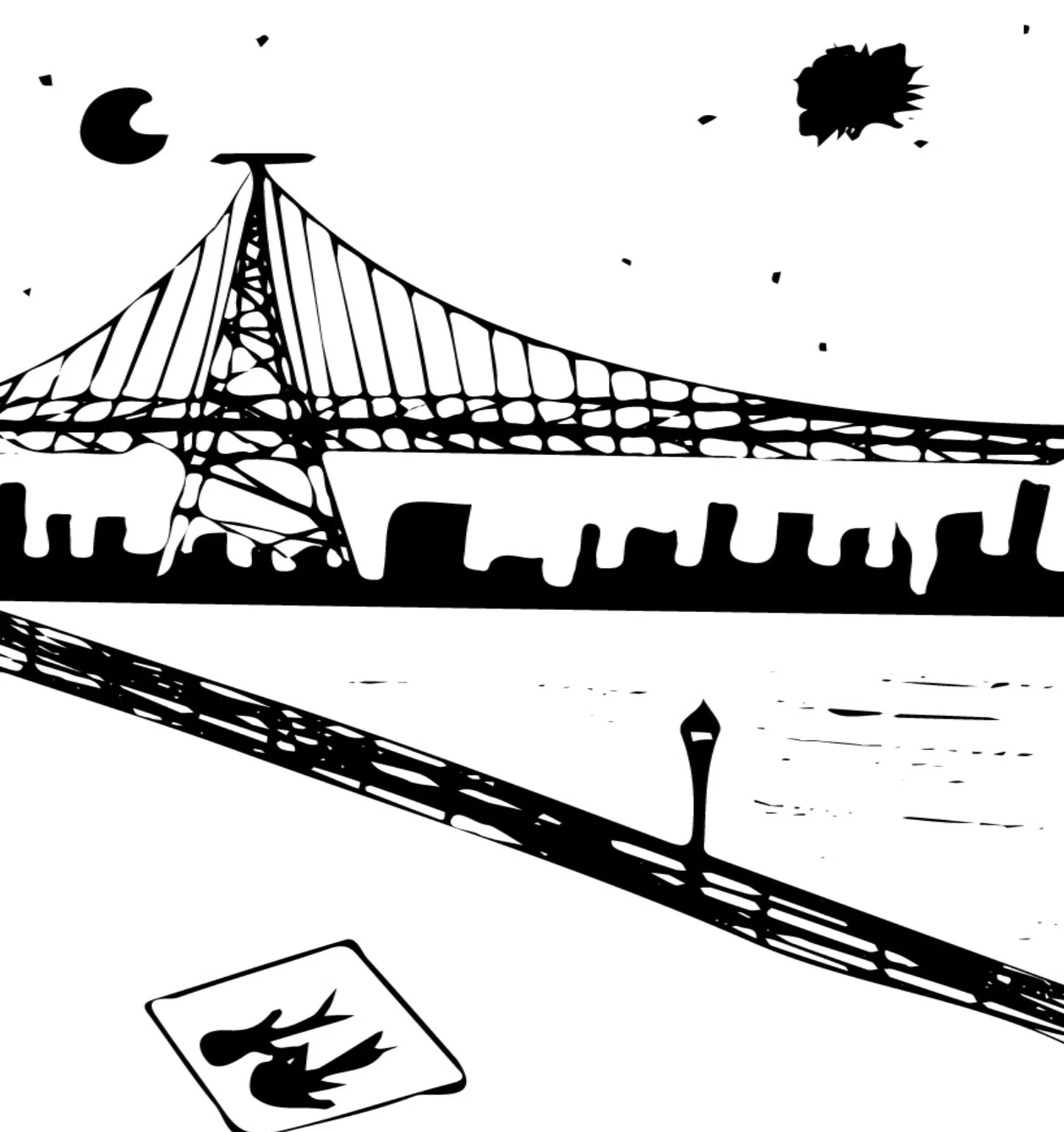
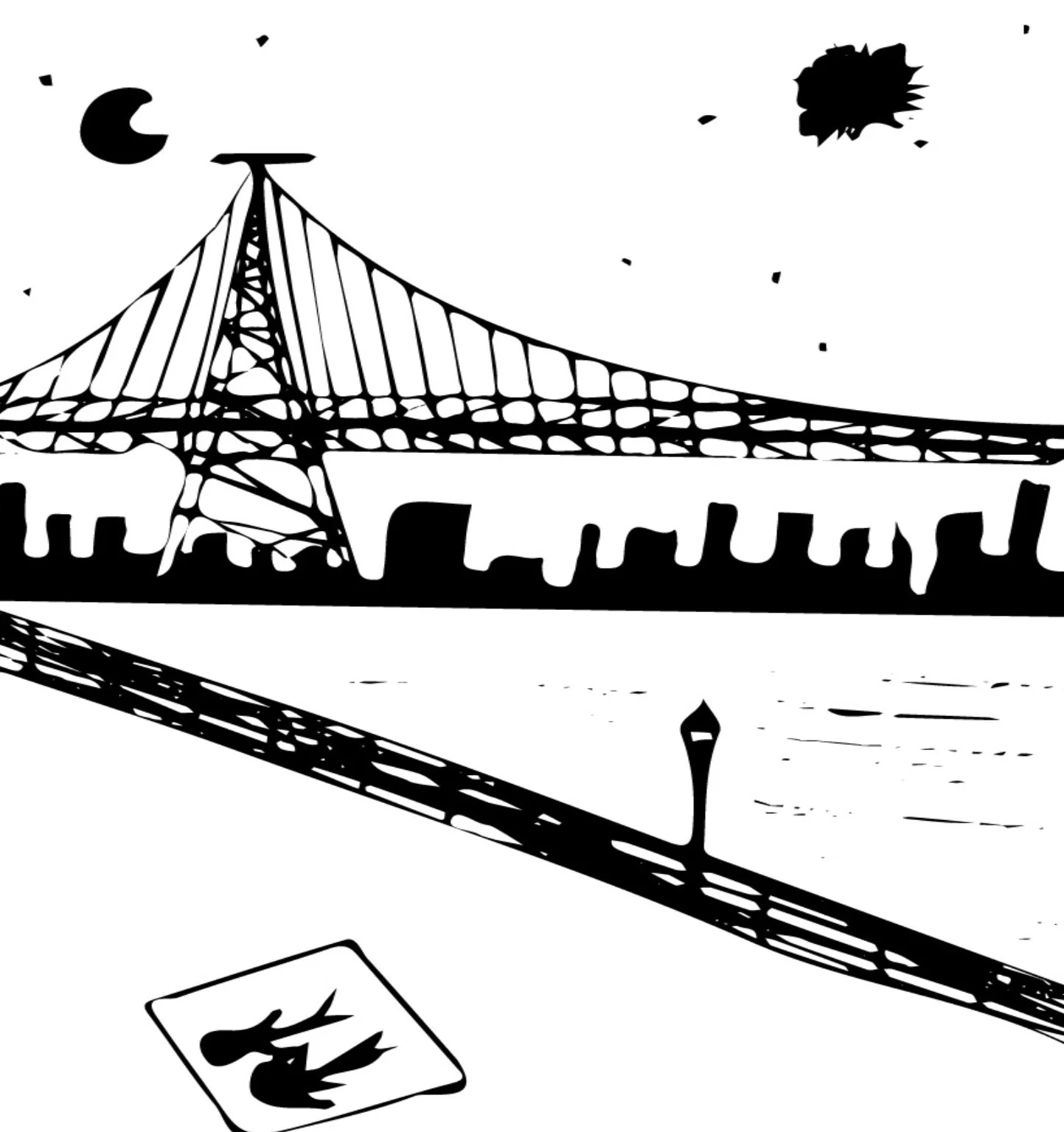
Eyrah hated big cities. There was no space to walk. There were sounds everywhere. It was congested, with no space to breathe. But moving to New York seemed exciting to him, even though the idea of living in a big city felt frustrating. Every other person he had learned about had lived in New York at some point. He thought about how exciting it would be to move to a city where he would breathe the same air, walk along the same waterfront that they did, and look up at the same sky as them, just like every other person he had learned about. He, too, was scared of the subway system, though, and was convinced that at some point while living in New York, he would get mugged. So after landing for the first time, he took an Uber to his place. The car crossed the Williamsburg Bridge, and from there he could see the Brooklyn and Manhattan Bridges. He noticed all the graffiti, the tennis courts, and other courts in Lower Manhattan, mentally noting where he would want to play. He lived by the Hewes St station and could see the J and the M from his window. He could hear the announcement: "Next stop, Marcy Av" from his window. That was when it occurred to him that he had moved to New York.
After a couple of days, Eyrah finally unpacked and set up his house. He went to Domino Park and sat for a while. People-watching was Eyrah’s ritual in each new city, as he knew people behaved differently wherever he lived. Williamsburg was strange. To go to the park, he walked along Broadway. Broadway was loud and chaotic, and people walked right up to his face, asking for extra cash. But as he walked further north, towards Domino Park, the streets felt different, quieter. When he reached Domino Park, he saw people picnicking and sunbathing, enjoying the last that the season had to offer, dogs running across, playing fetch. He was picking up on everything. In his peripheral vision, someone was having a conversation across the bench, on a call. He couldn’t hear their conversation, but he noticed a sad look on their face, the flushed cheeks, the droopy eyes. He saw how different New York was: the people in groups seemed so comfortable. He could tell that some people who were alone in the park felt truly isolated. There were some, though, he realised, who were very comfortable with solitude, unlike in other places he had lived.
Lua’s setup was quite different. It was slower. She had a routine: the first step was to decorate her wall. She knew it was illogical to start by decorating her wall, but she did it anyway, because every wall she decorated had some of the same things. There were some new things, but the familiar items felt like home to her, helping her establish a home base as she moved to a new place. Then she would set up the larger pieces of furniture.
Lua was someone who loved commuting. Before she moved to New York, she would memorise scenes along her daily route. She would put on her headphones and tune out, watching as she waited for her bus to reach her stop. Taking the same route daily, she realised she could notice the subtle differences. She felt dejected that she no longer had to use any public transport. She was starting her MFA in animation at Pratt Institute, and it was just a walk away from where she lived. But either way, she did the same: put her headphones on and walked. She noticed the brownstone houses and the different cafes, and she always walked alongside Fort Greene Park. She was fascinated by the elevated park and often saw people playing fetch with their dogs. Lua could focus on only one thing at a time. If the environment were loud, she would focus on that. The conversations that many people were having simultaneously, the sound of footsteps, the sound of cars. But she would focus on that and miss the other parts, like the shadow of a person before someone overtook her while she was walking, or that the person walking right in front of her had beautiful eyes. So every time she commuted, the headphones helped her tune out her environment and focus visually on her surroundings.
Eyrah moved from Pune to New York. At Deccan College, he was among the youngest researchers, focusing on archaeology and the Indus Valley Civilisation. He began incorporating geospatial data analysis into his research. When he discovered the M-Lab at Pratt Institute, which was also working with archaeological data and 3D modelling, he reached out and was invited to join the lab. Intrigued by the opportunity, he decided to move to New York.
Within his first week at Pratt, the lab's principal investigator asked him to present. The lab was preparing an exhibition, “Visualising Care,” exploring how deep mapping and archaeological data can reveal social connections. Eyrah’s previous work had examined DNA samples on excavated materials, building visualisations to show how care flows through society. He shared this research in his presentation and outlined his future focus at Pratt.
Lua wasn’t necessarily into archaeology, but she stumbled upon a poster for the talk and was fascinated by the connection between care and history. On a whim, she attended that evening. She was unexpectedly impressed. On her walk home, instead of listening to music and observing her environment, she looked up Eyrah and dove into his work.
Eyrah also noticed Lua. What caught his eye was that the top Lua wore seemed to be made of saree cloth, and the ends of her top had chevron patterns and a Zari border, a type of gold thread. It reminded him of the dress his ex-girlfriend wore, made from a Manipuri saree. He couldn’t remember things about his ex, like what she told him she liked. But he remembered the dress, because she wore it often, her favourite foods, and how she only wore the locket her mom gave her on special occasions.
Lua was reading outside in the sculpture park when she saw Eyrah walk by, so she went up to him and struck up a conversation. Lua told him all about what she liked about his work. Eyrah was intrigued and felt grateful. It was the first time he didn’t have to explain much, and someone understood what he was doing. So they walked and talked for a while, and he told her that his name meant "the sun" in Sinhala, which was funny because Lua meant "the moon" in Portuguese. He asked her how she was named Lua, and it was because her family lived in Goa when she was born. She loved looking at the moon with her parents on the beach at night, so she begged them to name her Lua, and they listened. Eyrah told her that he had jaundice when he was born, which was pretty severe, to the extent they put him in the neonatal intensive care unit (NICU), after which, his mom took him on hour-long walks daily, showing him to the sun. His mom’s best friend was Sri Lankan, and she told his mom to name him Eyrah, so his mom did. Then they joked that they should only meet at dawn and dusk because those are the only times when the sun and the moon are in the sky at the same time. So they decided to meet the next morning at 7 am and go for a walk in Fort Greene Park.
That day after Lua went home, she set multiple alarms. She wasn’t an early riser. She was more likely to sleep at 7 am than wake up at 7 am, but she really wanted to see him again. It was a strange desire.
Eyrah felt that too, the strange desire. He went back home and looked her up. Fascinated by her, he fell asleep, eager to see her again.
So they met at 7 am. She got iced coffee, and he got an iced latte. He offered her a sip, and she didn’t use his straw. She had the drink from the side of his glass. He picked up on that. They walked around Fort Greene Park, and as they walked, he noticed that she didn’t walk straight. Her direction would become diagonal, pushing him closer to the edge of the sidewalk. She kept asking him questions, “How did you get into spatial analysis from archaeology?”, “Why did you focus on care?” he kept answering. They got more personal over time, “Where did you grow up?”, but he overlooked how the questions changed over time. She didn’t ask any really intrusive questions, though. Just things you’d ask someone, but some of them were interesting and unexpected: “What did you put up on your walls growing up?” They looked at people exercising and dogs running around. He talked to her about visiting Domino Park and how he loved people-watching. He noticed their arms touched and how she let it linger. But then she got anxious about the time, checking her watch often. She had a class, and he had work, so they parted ways at Pratt's sculpture park. Before they did, she asked him if he wanted to go to Domino Park again with her next week in the evening. He said yes.
So the next week, they met in the evening at Domino Park, after all, they could only meet at dusk as per their running joke. They walked along for a while. It was her first time seeing the Williamsburg Bridge from the park. It reminded her a lot of Mumbai, where she grew up, because of the city lights, or maybe it had been a while since she had seen buildings taller than 12 stories. They both lay on their stomachs and watched the sunset. While doing so, their feet touched. She placed her arm next to his and used her index finger to caress his hands gently, but pulled away quickly, and he thought at that moment again that she didn’t feel that romantic spark. Then, as time went on, they turned around onto their backs and watched the stars, or tried to. During their conversation, he noticed things about her and pointed them out, like the calluses on her hands. She told him she was a gymnast. He would ask questions based on what he noticed, which made her feel seen. He liked answering her questions, too, because they made him feel seen. He liked how he would have said one thing, and she would tie it back to something he had mentioned before. He liked the way she made the connections in her head. He didn’t have to repeat himself with her. He just needed to say it once for her to remember. He noticed their arms touching, and they looked at each other as they lay on the grass. She held his hand, got closer, and kissed him.
Lua loved building characters. Even as a child, she picked up on what people said and used those details in her stories, often drawing on the personalities of people in her life. When she was 15, her mom discovered her dad was cheating. Lua found her mom crying in the bathroom and slipped her a zine. A story about her mom’s future: it wasn’t happy or sad, but it helped her mom come out of the bathroom. Lua realised her stories could make people feel. She knew she wanted to be an animator, but chose a liberal arts degree for flexibility, ending up at Pomona College. A summer residency at Space Studio in Baroda led her to experimental animation and, eventually, an MFA at Pratt. Storytelling and character-building came naturally, but drawing did not. Ironic, because her MFA was in animation.
So, Eyrah and Lua got together. The way they felt around each other was almost like looking at their own reflections, like the sun’s light reflecting off the moon.
Lua would tell Eyrah that she had grown more comfortable with him. Lua would initially face him and sleep, but as she grew more comfortable, she started sleeping on her other side. She would hold his hands less frequently, as before. Eyrah started noticing her affection shift, and he took her physical signals as a sign she didn’t feel as deeply for him anymore. Even though Lua would tell him otherwise, Eyrah couldn’t remember her words the way she remembered his.
When things start, Lua feels excited, but as life’s logistics catch up, things slow down and start feeling bleak. She wasn’t ready for Eyrah to see that part of her. The days when she compared herself to others around her, or when she’d look at the mirror and feel insecure about herself. Sometimes, a single negative comment would persistently stay in her head. It finally came pouring out. She couldn’t mask that side from Eyrah. Spending so much time together, those parts of her slipped. He came over and tried to cheer her up. In the moment, she did chuckle and smile, but after he left, she’d feel empty. She realised he didn’t understand the days when she was sad, and she just wanted to be. He couldn’t let her just be. He always tried to fix it and make her happy instantly.
They went to Domino Park and, while sitting on the picnic blanket watching the sunset, noticed two people on a picnic blanket right next to them. Lua tried to listen to their conversation and noticed that one of them was talking about getting married in the future, and the other person would say yes, excitedly. Eyrah noticed the other person’s foot tapping and told Lua that the other person was nervous. So that day, they didn’t seem like the reflections they thought they were to each other. Their differences caught up with them, and they finally argued. Eyrah told her he felt rejected by her, but Lua assured him verbally, but he wouldn’t listen. She told him he wouldn’t listen to her at all. She told him that he never remembered anything she’d say. That he wouldn’t even listen to her when she’d ask him to let her be. So she walked off, and he did too.
That night, they both couldn’t sleep. They both looked at their phones, hoping the other would call. Eyrah realised that his ex would say the same things about him: that he never listened and never remembered, and that it frustrated her, and that’s why she left. And that’s when something clicked for Eyrah, and he called.
So to remember what Lua said, Eyrah would note things about her. He started doing that with people in his life, too. Lua started writing to Eyrah about how she felt, so he’d be able to look back and remember the words she had said to him, and remind himself that she cares. By noting down, he starts to realise how Lua feels when she’s sad, and he learns to love her the way she wants to be loved, especially on the days she’s sad. By doing this with others in his life as well, he realised the importance of words. By practising this, he realised the intersection of oral history and archaeology. Lua tried to see the way Eyrah saw, and she started drawing more. Each day, she’d go to Fort Greene Park and draw for an hour. Over time, she noticed she was picking up on things visually that she hadn’t before, making her a better artist, too.
So we don’t know whether Eyrah and Lua will have a happily-ever-after. Still, in that moment, they were two people making efforts to understand each other, and slowly, through learning from one another, they began to see the world more similarly.